Back for more inspiration
Why Porcelain Worktops Are Replacing Quartz
Porcelain worktops have quietly become the surface of choice for premium kitchens across the UK. For the better part of a decade, quartz was the automatic answer — durable, low-maintenance, available in hundreds of finishes. It felt like the sensible, modern choice. And it was, for its time.
But in showrooms and on the design desks of kitchen specialists, porcelain worktops are overtaking quartz — not because of marketing muscle, but because they earn it.
What is quartz?
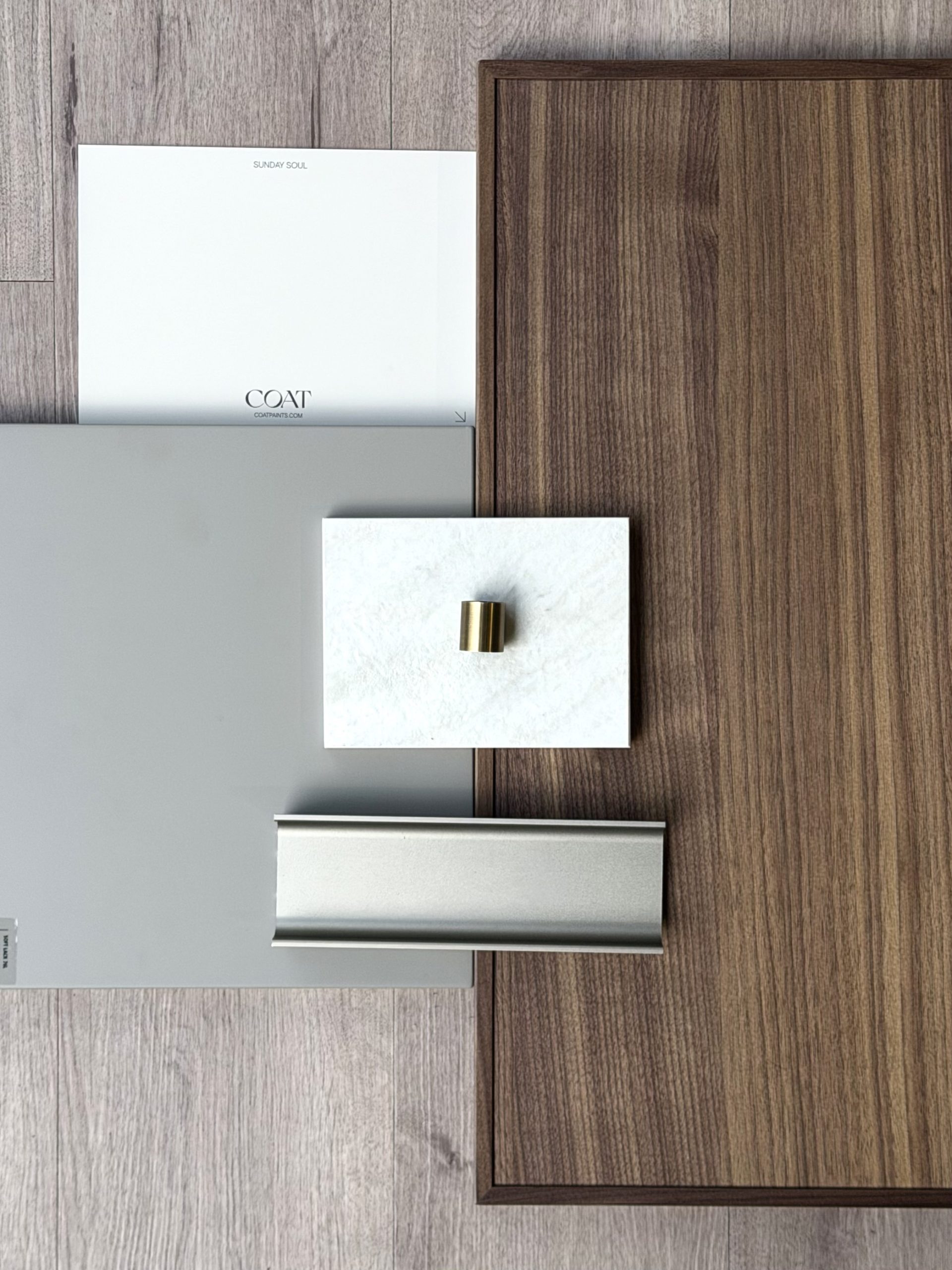
Quartz worktops are engineered stone — roughly 93% ground quartz crystals bound together with polymer resins. However, that resin content also creates significant drawbacks compared to porcelain worktops. Heat is its enemy. Place a hot pan directly on the surface and you risk thermal shock, discolouration, or irreversible damage. UV exposure causes the organic resins and pigments to yellow or fade over time, particularly in lighter colourways near south-facing windows. And because quartz comes in standard slab sizes, larger kitchens require joins that gradually show wear near sinks and high-use areas.
None of this makes quartz a bad material — it remains far better than laminate or solid timber for everyday use. But when you compare it directly to porcelain worktops, the limitations become hard to ignore.
What is porcelain?
So what makes porcelain different? Porcelain is fired at temperatures exceeding 1,200°C. At that heat, the raw clay minerals undergo vitrification — they fuse into a dense, glass-like structure that is entirely inorganic. There are no resins, no binders, and no organic components of any kind. As a result, the practical implications are significant.
No heat restriction — genuinely
Because porcelain contains no organic materials, it cannot be damaged by domestic cooking temperatures. Hot pans, boiling water, and direct contact with oven trays present no risk to the surface. This isn’t a minor convenience; in a working kitchen, being able to cook freely without worrying about worktop damage changes how the room feels to use.
UV-stable and colourfast
Beyond heat resistance, porcelain is also UV-stable and colourfast. The pigments used in porcelain are mineral-based and fired into the surface at high temperature. In fact, they’re as stable as the material itself. A porcelain worktop will look identical in ten years as it does on installation day — whether the kitchen faces south or north, receives direct sunlight or none.
Genuinely non-porous — without sealing
Both quartz and porcelain market themselves as non-porous, but there’s a meaningful difference. Quartz achieves non-porosity through its resin fill. If that resin degrades, the protection diminishes with it. Porcelain’s non-porosity is structural — a function of the vitrification process. There is no sealing required on installation, and no resealing required over the lifetime of the surface. Crucially, this has direct implications for hygiene. A surface with no pores, no hairline cracks, and no organic binders gives bacteria nowhere to harbour. For food preparation surfaces, that matters.
Larger formats, fewer joins
Laminam, as one example, produces porcelain slabs up to 3,000 × 1,000mm. For a kitchen island or long worktop run, this often means a single uninterrupted piece. In practice, far fewer joins than quartz. The visual result is dramatic: a continuous expanse of material with no interruptions.

The aesthetic leap
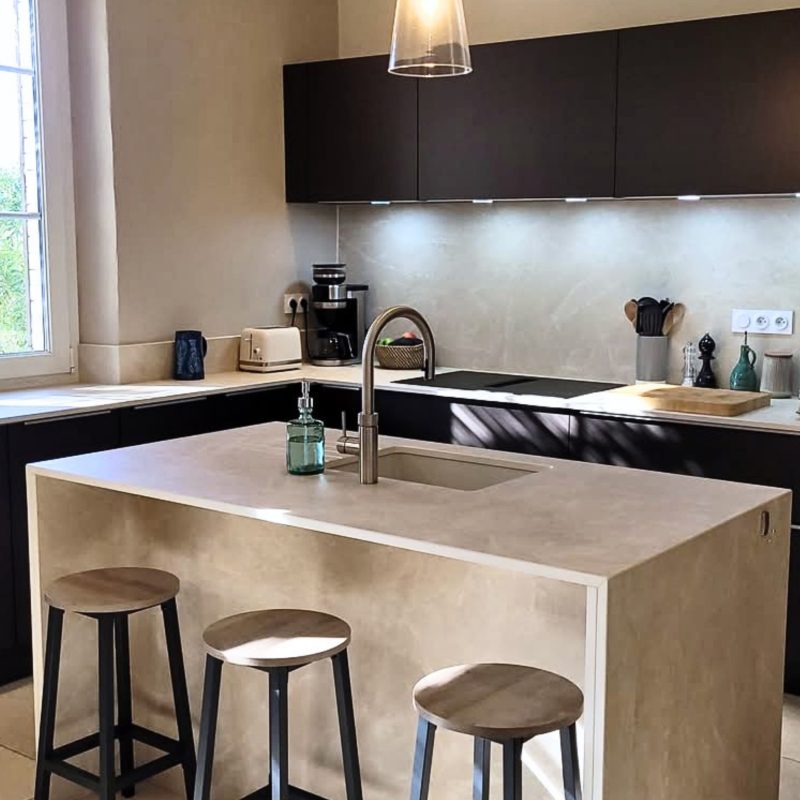
A few years ago, the honest critique of porcelain was that it looked manufactured. The surfaces looked clean and consistent — perhaps too consistent, lacking the organic variation that made natural stone and high-quality quartz feel genuinely luxurious. Today, that has changed. The technology used to surface-print and texture porcelain has advanced to a point where the best examples — Laminam’s mineral and stone collections among them — are visually indistinguishable from the materials they reference. The depth, the variation, the subtle veining of a marble-effect finish: manufacturers now render it with a fidelity that would have been impossible a decade ago.
The advantage over natural stone or even quartz is that this beauty is consistent across the entire slab, and entirely predictable. When you choose a finish, you know exactly what you’re getting — and you know it will look the same in every light, on every day, for the life of the kitchen.
The environmental consideration
There’s also an environmental case to consider. This is a factor increasingly informing purchasing decisions, and porcelain compares well. Quartz worktops require energy-intensive resin processing, and the polymer binders are petroleum-derived. At end-of-life, quartz composite is difficult to recycle — the resin and stone cannot be easily separated.
Porcelain contains primarily natural clays and minerals, requires no petrochemical binders, and has a longer product lifespan that reduces the frequency of replacement. Laminam in particular has invested significantly in sustainable production — using recycled water in their manufacturing process and reducing energy consumption per square metre produced.
A longer-lasting surface that requires fewer resources to maintain is, simply, a better environmental story.
Who should consider porcelain?
So who is porcelain actually for? The honest answer is: anyone investing in a kitchen they intend to keep.
Porcelain is a premium material with a premium price — though the Nolte × Laminam promotion currently offering 50% off selected finishes makes it significantly more accessible than usual. The investment is justified when you’re building a kitchen that will be used daily for decades, and when you want a surface that requires nothing of you beyond an occasional wipe-down.
Ready to explore Laminam porcelain worktops for your kitchen? Book a design consultation with your local Nolte designer.
The bottom line
Ultimately, the shift is straightforward. Quartz succeeded because it was better than what came before it. Porcelain is succeeding because it’s better than quartz — more durable, more heat-resistant, more stable, and increasingly, more beautiful.
In fact, the shift isn’t a trend. It’s a straightforward response to a better material becoming available. Furthermore, as production technology continues to improve…
Interested in adding a Laminam porcelain worktop to your Nolte kitchen? Our current promotion offers 50% off selected finishes on qualifying kitchen orders from 11th May to 11th July 2026. Visit nolte-kitchens.co.uk/laminam-promotion for full details.
More from Nolte insight
Read More
Buying Guides
If the idea of creating your dream kitchen is a little daunting, don’t worry — our buying guides will soon get you cooking.

Design Advice
Keeping an eye on the latest trends and design ideas that make your kitchen feel even more like home.

Living
From quick-win recipes and styling advice to party-hosting hacks and storage tips, we’ll help you turn your kitchen into your real living room.
Your recipe to a beautiful kitchen
Kitchen inspiration, special offers, expert advice. Welcome to a newsletter you’ll actually want to read.
By choosing to sign up, you will join our mailing list. You can opt out at any time.
Visit us
Request appointmentFind your nearest showroom
Download a brochure
Love where you live.