Back for more inspiration
How to Get the Most Out of a Kitchen Design Appointment
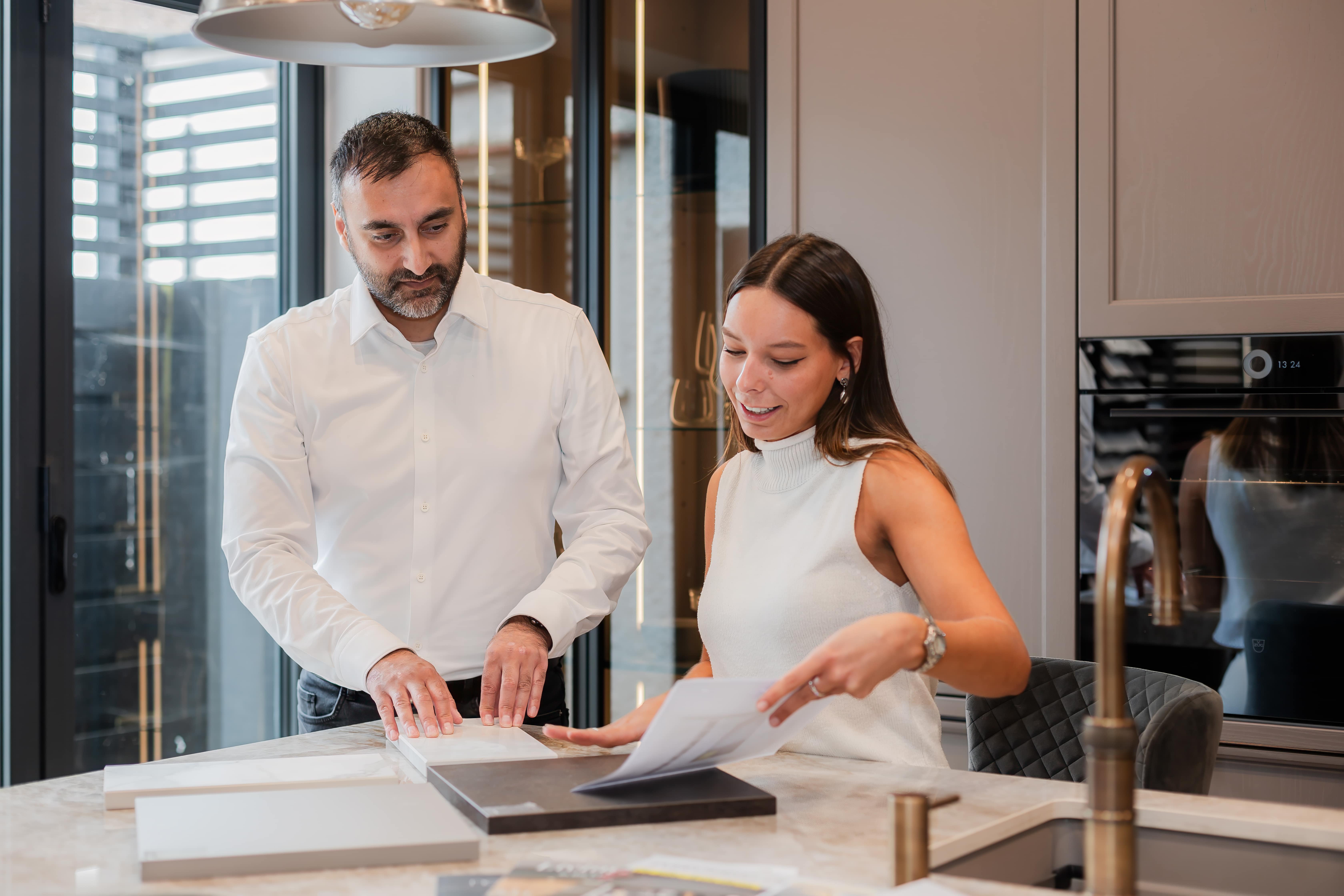
Most people book a kitchen design appointment somewhere near the end of a project in their head, not the start of one. The extension's been drawn up, maybe the builder's already quoted, and the kitchen feels like the last piece to slot in. It's a completely understandable order to do things in, and it's also the one thing that causes more headaches than anything else we see.
A kitchen isn't a fitting exercise. It's a design one and design decisions made early are cheap to change and expensive to unpick later.
Why "early" matters more than people expect
Once a stud wall’s up, a window’s been moved, or a drain run has been decided, a lot of the kitchen’s options have quietly closed without anyone meaning them to. An island that would have worked beautifully six inches to the left is now fixed by where the electrician’s already run the cables. A run of units that needed 2.4m of wall now has 2.3m because the door swing wasn’t accounted for.
None of this is anyone’s fault, it’s just what happens when the kitchen is treated as the last decision instead of one of the first. Coming in for a design appointment while the building work is still at the drawing-board stage means the kitchen can actually shape the room, rather than being squeezed into whatever’s left.
What to bring to make the appointment count
You don’t need finished plans to have a useful first appointment, a rough idea and genuine information about how you live is worth more than a polished Pinterest board. That said, a few things make a real difference:
- Rough dimensions of the space, even hand-measured: window and door positions matter as much as the overall size
- Photos of the room and the house more generally: period features, existing floor, anything you want to keep or work around
- Any plans you already have, even early architect’s sketches or planning drawings
- A genuine sense of how you cook and live: who’s usually in the kitchen, whether you eat there daily, whether you entertain, what currently annoys you about your existing one
That last point matters more than people think. A kitchen designed around a Pinterest board of someone else’s life doesn’t necessarily fit yours. The appointment works best as a conversation about your household, not a catalogue browse.
What a good design appointment should actually cover
A proper consultation isn’t a sales pitch dressed up as a chat. It should cover:
- How the space works practically: walking routes, sink-to-hob-to-fridge relationships, where post and school bags land, whether two people can cook at once
- What’s fixed and what isn’t: structural walls, existing plumbing and electrics, windows that can’t move, so the design works with reality rather than against it
- Storage that matches how you actually live, not a generic layout. We’re talking deep drawers for pans, proper larder space, bin storage sized for your household rather than squeezed in as an afterthought
- Kitchen ergonomics, not just the door front: carcass quality, height and hinge specification affect how the kitchen performs in five years far more than the colour does, which is why it’s worth asking about build quality as much as finish
This is also where German-engineered cabinetry tends to come up naturally in the conversation. Precision manufacturing, consistent tolerances and hinges rated for tens of thousands of openings matter more once you’re living with a kitchen daily than it does on a showroom floor. It’s a fair question to ask any designer: what’s actually behind the door front, and how it is built.

Why the showroom itself is worth the visit worth the visit
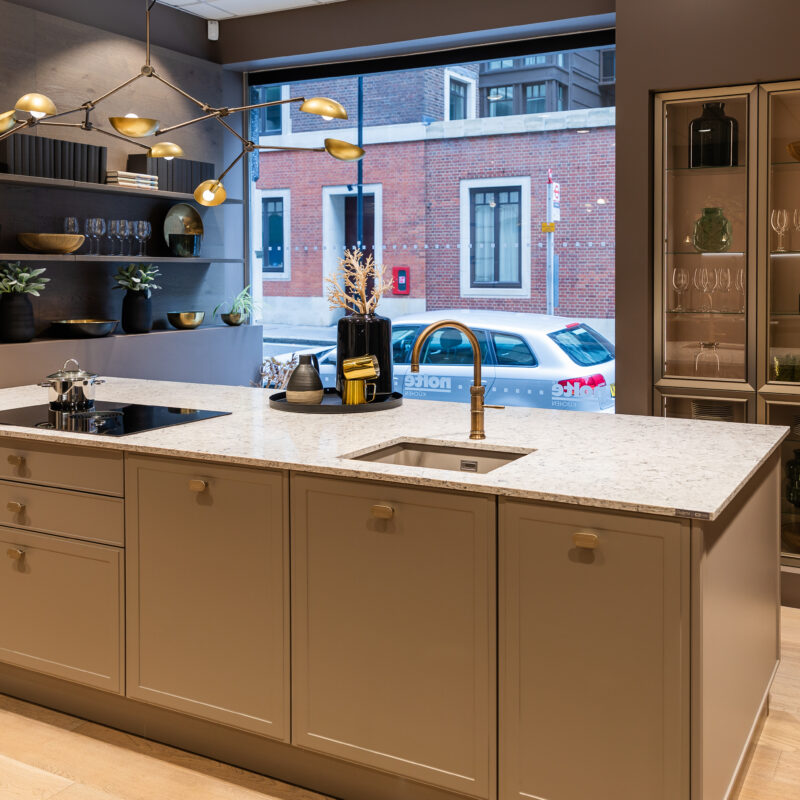
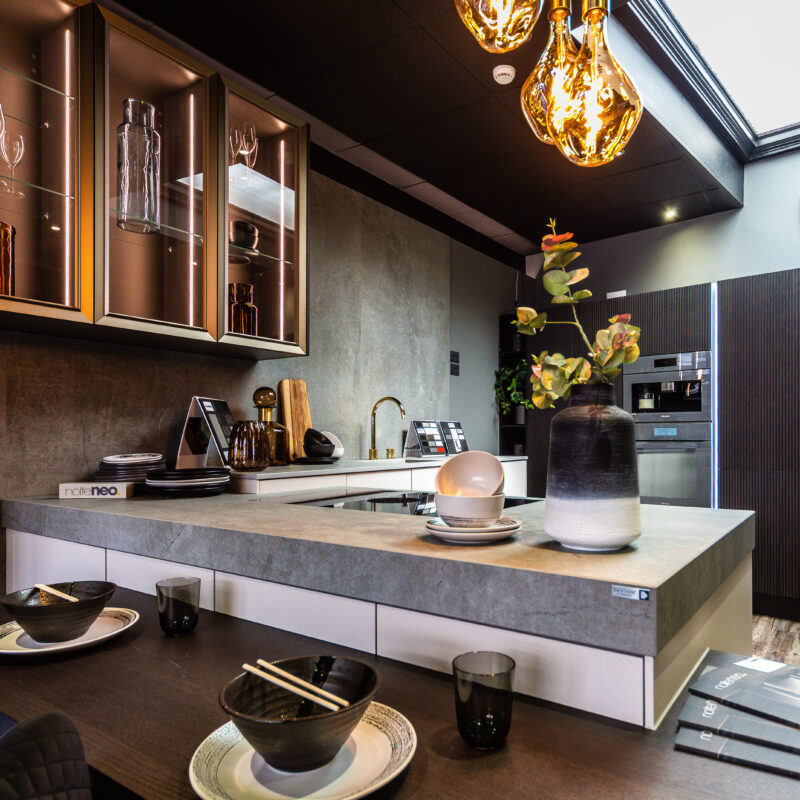
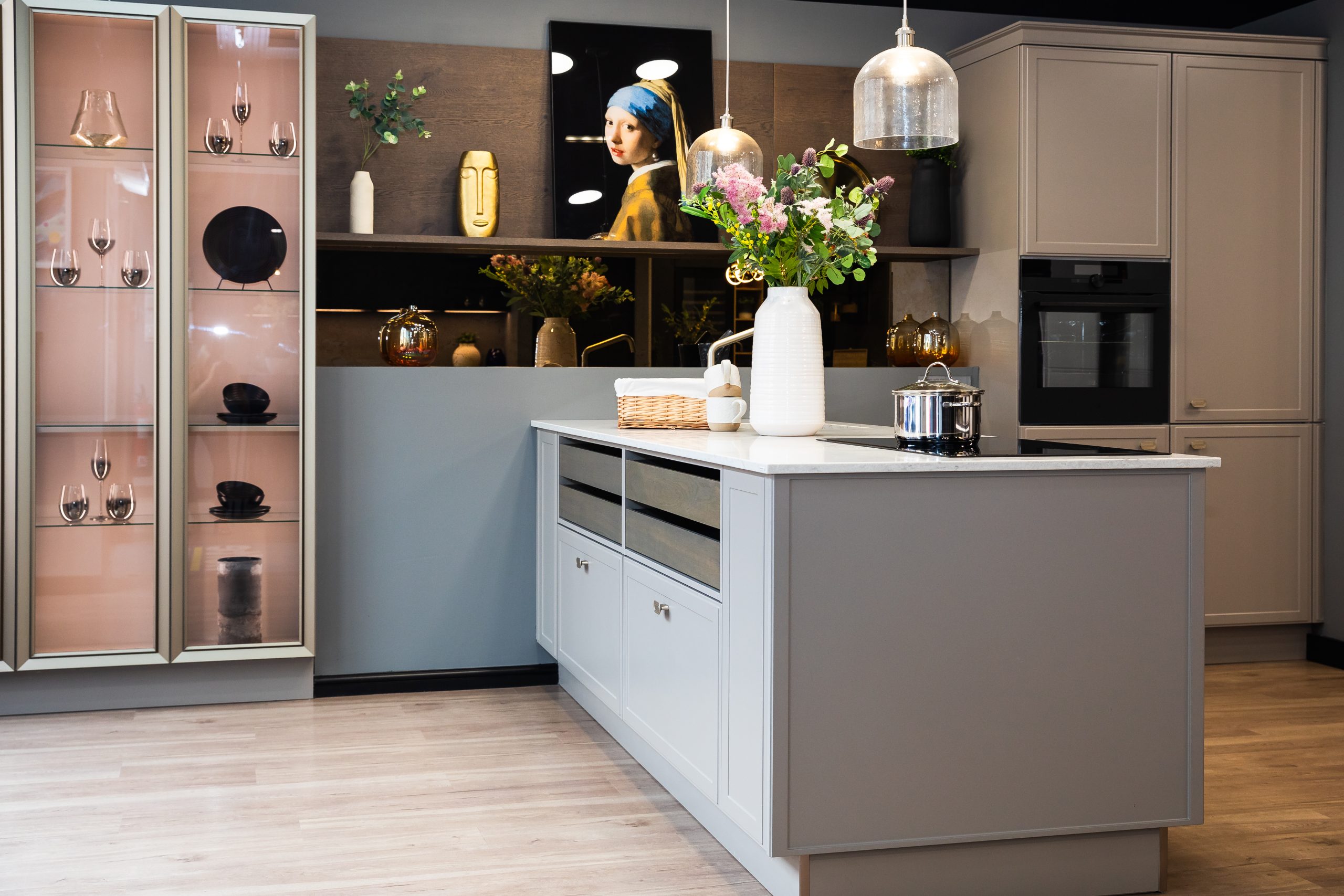
Renders and samples only tell you so much. Standing in front of a full cabinet run, opening real drawers, seeing how a finish catches the light and how a handleless edge actually feels under your hand, tells you things a brochure can’t. It’s also the easiest way to have an honest conversation about scale – what a 900mm run actually looks like in a room, rather than what it looks like on a plan.
Coming in early means that conversation can still influence the wider project. Coming in after everything’s built means the conversation is mostly about compromise.
The short version
Book the appointment before the building work starts, not after. Bring rough measurements, photos and an honest sense of how your household actually uses a kitchen, rather than a finished vision. Ask about what’s behind the door front as much as what’s on it. And visit the showroom in person if you can: it tells you more in twenty minutes than a website will in a week.
If you’re at the early stages of a kitchen project, come and talk to us before the builders start, not after. It’s the single biggest thing that determines how smoothly the rest of the project goes.
Your recipe to a beautiful kitchen
Kitchen inspiration, special offers, expert advice. Welcome to a newsletter you’ll actually want to read.
By choosing to sign up, you will join our mailing list. You can opt out at any time.
Visit us
Request appointmentFind your nearest showroom
Download a brochure
Love where you live.